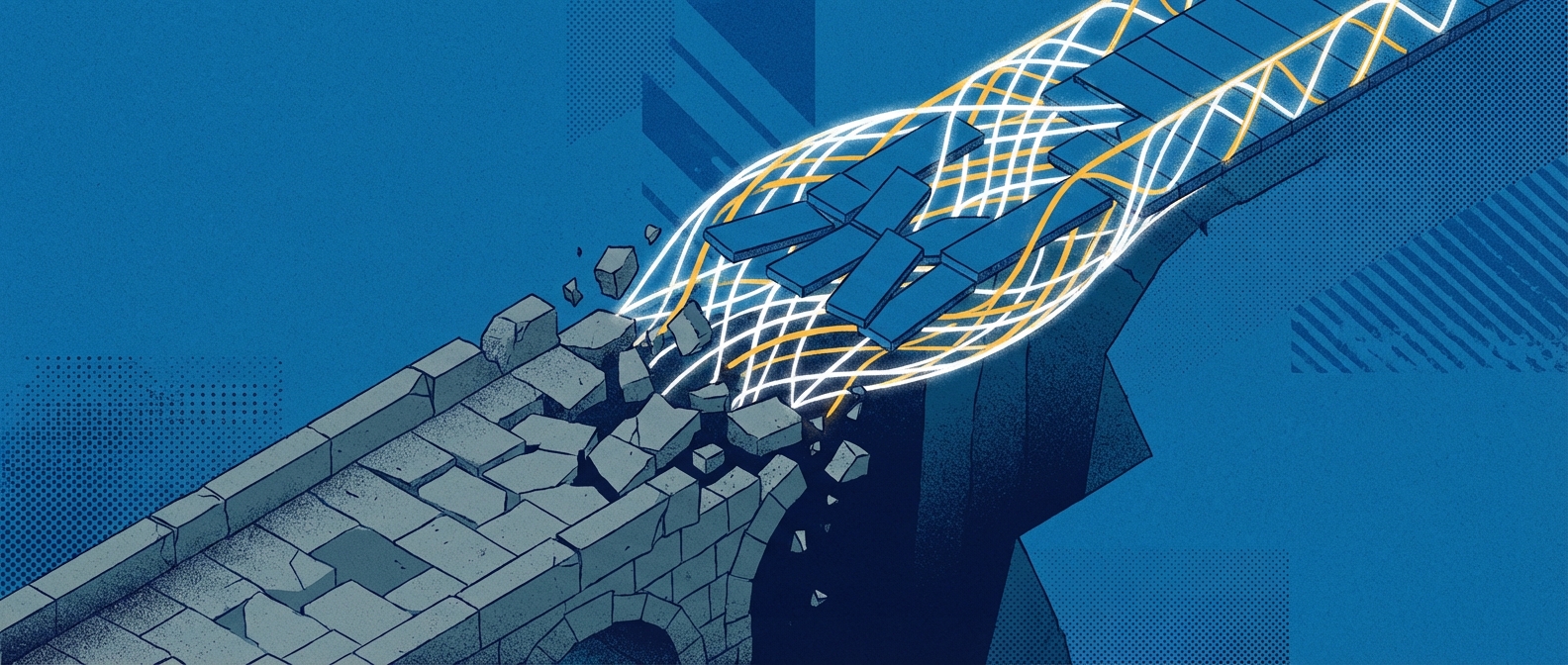
How to Successfully Navigate Crisis-Driven Digital Transformations
Ralf Plattfaut, Vincent Borghoff
This study investigates how digital transformations initiated by a crisis, such as the COVID-19 pandemic, differ from transformations under normal circumstances. Through case studies of three German small and medium-sized organizations (the 'Mittelstand'), the research identifies challenges to established transformation 'logics' and provides recommendations for successfully managing these events.
Problem
While digital transformation is widely studied, there is little understanding of how the process works when driven by an external crisis rather than strategic planning. The COVID-19 pandemic created an urgent, unprecedented need for businesses to digitize their operations, but existing frameworks were ill-suited for this high-pressure, uncertain environment.
Outcome
- The trigger for digital transformation in a crisis is the external shock itself, not the emergence of new technology. - Decision-making shifts from slow, consensus-based strategic planning to rapid, top-down ad-hoc reactions to ensure survival. - Major organizational restructuring is deferred; instead, companies form small, agile steering groups to manage the transformation efforts. - Normal organizational barriers like inertia and resistance to change significantly decrease during the crisis due to the clear and urgent need for action. - After the crisis, companies must actively work to retain the agile practices learned and manage the potential re-emergence of resistance as urgency subsides.
Host: Welcome to A.I.S. Insights — powered by Living Knowledge. I’m your host, Anna Ivy Summers. Host: Today, we're diving into a fascinating study titled "How to Successfully Navigate Crisis-Driven Digital Transformations." Host: It explores how digital overhauls prompted by a crisis, like the recent pandemic, are fundamentally different from those planned in normal times. And here to break it all down for us is our expert analyst, Alex Ian Sutherland. Welcome, Alex. Expert: Great to be here, Anna. Host: Alex, let's start with the big picture. We all know digital transformation is a business buzzword, but this study focuses on a very specific scenario. What's the core problem it addresses? Expert: The problem is that most of our playbooks for digital transformation are designed for peacetime. They assume you have time for strategic planning and consensus-building. Expert: But what happens when a crisis hits, as COVID-19 did, and suddenly your entire business model is at risk? Existing frameworks just weren't built for that kind of high-pressure, high-stakes environment where you have to adapt overnight just to survive. Host: So how did the researchers get inside this chaotic process to understand it? Expert: They conducted in-depth case studies on three small and medium-sized German organizations—a bank, a regional development agency, and a manufacturing firm. This allowed them to see, up close, how these companies navigated the transformation from the very beginning of the crisis. Host: And what did they find? What makes a crisis-driven transformation so different? Expert: The biggest difference is the trigger. In normal times, a new technology appears and a company strategically decides how to use it. In a crisis, the trigger is the external shock itself. Survival becomes the only goal, and technology is just the tool you grab to make that happen. Host: It sounds like a shift from proactive strategy to pure reaction. How does that impact decision-making? Expert: It completely flips it. Long, careful, bottom-up planning is replaced by rapid, top-down, ad-hoc decisions. The study found that instead of forming large project teams, these companies created small, agile steering groups of senior leaders who could make 'good enough' decisions immediately. Host: What about the typical resistance to change we always hear about? Did that get in the way? Expert: That's one of the most interesting findings. Those normal barriers—organizational inertia, employee resistance—they largely disappeared. The study shows that when the threat is existential, the need for change becomes obvious to everyone. The urgency of the situation creates a powerful, shared purpose. Host: So, the crisis forces agility. But what happens when the immediate danger passes? Expert: That’s the catch. The study warns that once the urgency fades, resistance can re-emerge. Employees might feel 'digital oversaturation,' or old cultural habits can creep back in. The challenge then becomes how to hold on to the positive changes. Host: This is where it gets critical for our listeners. Alex, what are the practical takeaways for business leaders who might face the next crisis? Expert: The study offers some clear recommendations. First, in a crisis, suspend normal bottom-up decision-making. Use a small, top-down steering group to ensure speed and clarity. Host: So, command and control is key in the short term. What's next? Expert: Second, don't aim for the perfect solution. Aim for a 'satisfactory' one that can be implemented fast. You can optimize it later. As one manager in the study noted, they initially went for solutions that were simply "available and cost-effective in the short term." Host: That makes sense. Get the lifeboat in the water before you worry about what color to paint it. Expert: Exactly. Third, use the crisis as a catalyst for cultural change. Since the usual barriers are down, it's a unique opportunity to build a more agile, error-tolerant culture. Communicate that initial solutions are experiments, not permanent fixtures. Host: And the final takeaway? Expert: Don't just snap back to the old way of doing things. After the crisis, consciously evaluate the crisis-mode practices you adopted. Keep the agility, keep the speed, and embed them into your new normal. Don't let the lessons learned go to waste. Host: Fantastic insights. So, to recap: a crisis changes all the rules of digital transformation. The key for leaders is to embrace top-down speed, aim for 'good enough' solutions, use the moment to build a more resilient culture, and then be intentional about retaining those new capabilities. Host: Alex Ian Sutherland, thank you so much for shedding light on such a timely topic. Expert: My pleasure, Anna. Host: And thank you to our audience for tuning in to A.I.S. Insights — powered by Living Knowledge. Join us next time as we translate another key piece of research into actionable business intelligence.
Digital Transformation, Crisis Management, Organizational Change, German Mittelstand, SMEs, COVID-19, Business Resilience