Transforming Energy Management with an AI-Enabled Digital Twin
Hadi Ghanbari, Petter Nissinen
This paper reports on a case study of how one of Europe's largest district heating providers, called EnergyCo, implemented an AI-assisted digital twin to improve energy efficiency and sustainability. The study details the implementation process and its outcomes, providing six key recommendations for executives in other industries who are considering adopting digital twin technology.
Problem
Large-scale energy providers face significant challenges in managing complex district heating networks due to fluctuating energy prices, the shift to decentralized renewable energy sources, and operational inefficiencies from siloed departments. Traditional control systems lack the comprehensive, real-time view needed to optimize the entire network, leading to energy loss, higher costs, and difficulties in achieving sustainability goals.
Outcome
- The AI-enabled digital twin provided a comprehensive, real-time representation of the entire district heating network, replacing fragmented views from legacy systems. - It enabled advanced simulation and optimization, allowing the company to improve operational efficiency, manage fluctuating energy prices, and move toward its carbon neutrality goals. - The system facilitated scenario-based decision-making, helping operators forecast demand, optimize temperatures and pressures, and reduce heat loss. - The digital twin enhanced cross-departmental collaboration by providing a shared, holistic view of the network's operations. - It enabled a shift from reactive to proactive maintenance by using predictive insights to identify potential equipment failures before they occur, reducing costs and downtime.
Host: Welcome to A.I.S. Insights, the podcast powered by Living Knowledge, where we translate complex research into actionable business strategy. I’m your host, Anna Ivy Summers.
Host: Today, we're diving into a fascinating case study called "Transforming Energy Management with an AI-Enabled Digital Twin." It details how one of Europe's largest energy providers used this cutting-edge technology to completely overhaul its operations for better efficiency and sustainability. With me is our expert analyst, Alex Ian Sutherland. Alex, welcome.
Expert: Thanks for having me, Anna.
Host: So, Alex, let's start with the big picture. Why would a massive energy company need a technology like an AI-enabled digital twin? What problem were they trying to solve?
Expert: Well, a company like EnergyCo, as it's called in the study, manages an incredibly complex district heating network. We're talking about over 2,800 kilometers of pipes. Their traditional control systems just couldn't keep up.
Host: What was making it so difficult?
Expert: It was a perfect storm of challenges. First, you have volatile energy prices. Second, they're shifting from a few big fossil-fuel plants to many smaller, decentralized renewable sources, which are less predictable. And internally, their departments were siloed. The production team, the network team, and the customer team all had different data and different priorities, leading to significant energy loss and higher costs.
Host: It sounds like they were flying with a dozen different dashboards but no single view of the cockpit. So what was the approach they took? What exactly is a digital twin?
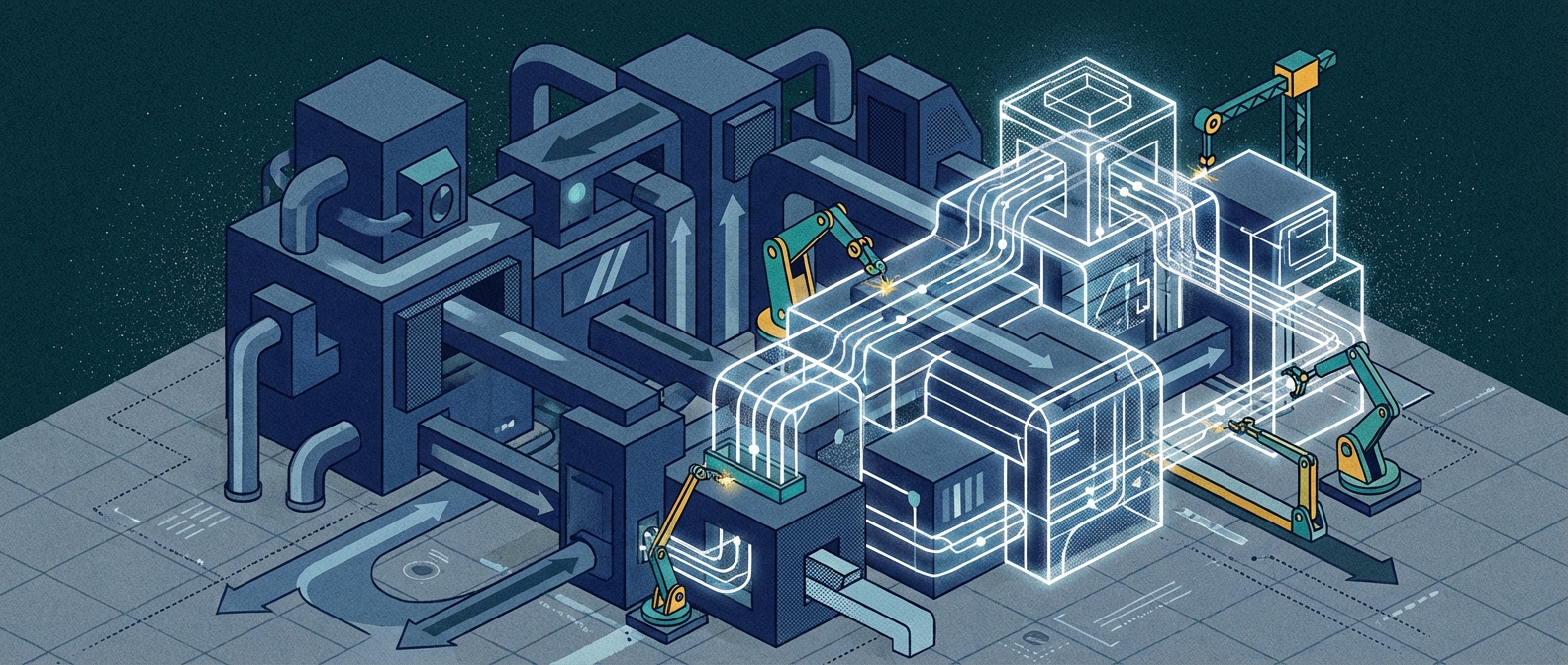
Expert: In simple terms, a digital twin is a dynamic, virtual replica of a physical system. The key thing that distinguishes it from a simple digital model is that the data flow is automatic and two-way. It doesn't just receive real-time data from the physical network; it can be used to simulate changes and even send instructions back to optimize it.
Host: So it’s a living model, not a static blueprint. How did the study find this approach worked in practice for EnergyCo? What were the key outcomes?
Expert: The results were transformative. The first major finding was that the digital twin provided a single, comprehensive, real-time representation of the entire network. For the first time, everyone was looking at the same holistic picture.
Host: And what did that unified view enable them to do?
Expert: It unlocked advanced simulation and optimization. Operators could now run "what-if" scenarios. For example, they could accurately forecast demand based on weather data and then simulate the most cost-effective way to generate and distribute heat, drastically reducing energy loss and managing those fluctuating fuel prices.
Host: The study also mentions collaboration. How did it help there?
Expert: By breaking down the data silos, it naturally improved cross-departmental collaboration. When the production team could see how their decisions impacted network pressure miles away, they could make smarter, more coordinated choices. It created a shared operational language.
Host: That makes sense. And I was particularly interested in the shift from reactive to proactive maintenance.
Expert: Absolutely. Instead of waiting for a critical failure, the AI within the twin could analyze data to predict which components were under stress or likely to fail. This allowed EnergyCo to schedule maintenance proactively, which is far cheaper and less disruptive than emergency repairs.
Host: Alex, this is clearly a game-changer for the energy sector. But what’s the key takeaway for our listeners—the business leaders in manufacturing, logistics, or even retail? Why does this matter to them?
Expert: The most crucial lesson is about global versus local optimization. So many businesses try to improve one department at a time, but that can create bottlenecks elsewhere. A digital twin gives you a holistic view of your entire value chain, allowing you to make decisions that are best for the whole system, not just one part of it.
Host: So it’s a tool for breaking down those internal silos we see everywhere.
Expert: Exactly. The second key takeaway is that the human element is vital. The study shows that EnergyCo didn't just deploy the tech and replace people. They positioned it as a tool to support their operators, building trust and involving them in the process. Automation was gradual, which is critical for buy-in.
Host: That’s a powerful point about managing technological change. Any final takeaway for our audience?
Expert: Yes, the study highlights how this technology can become a foundation for new business models. EnergyCo is now exploring how to use the digital twin to give customers real-time data, turning them from passive consumers into active participants in energy management. For any business, this shows that operational tools can unlock future strategic growth.
Host: So, to summarize: an AI-enabled digital twin offers a holistic, real-time view of your operations, it breaks down silos to enable smarter decisions, and it can even pave the way for future innovation. It's about augmenting your people, not just automating processes.
Host: Alex Ian Sutherland, thank you so much for these brilliant insights.
Expert: My pleasure, Anna.
Host: And thank you to our audience for tuning into A.I.S. Insights, powered by Living Knowledge. Join us next time as we uncover more actionable intelligence from the world of research.
Digital Twin, Energy Management, District Heating, AI, Cyber-Physical Systems, Sustainability, Case Study