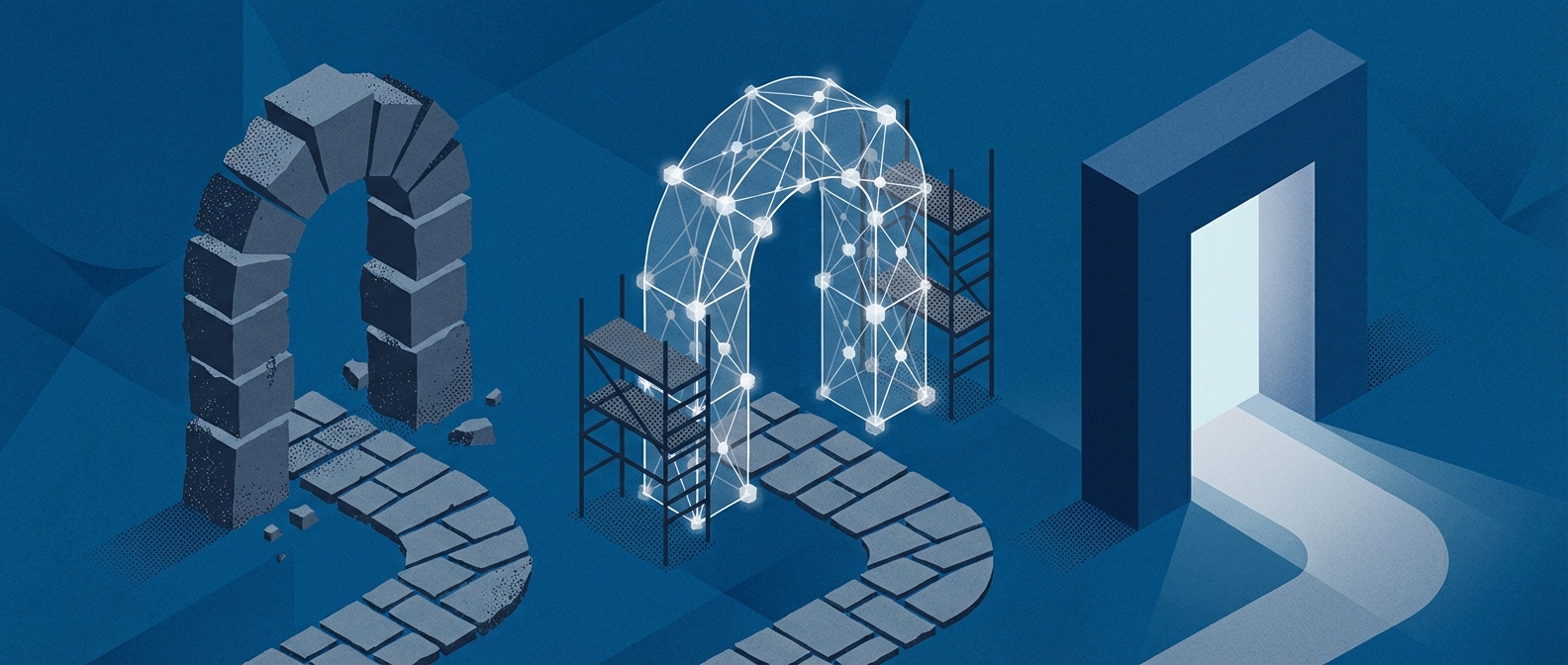
This study examines how a U.S. recruiting company, ASK Consulting, successfully managed a major digital overhaul by treating the employee transformation as a 'rite of passage.' Based on this case study, the paper outlines a three-stage approach (separation, transition, integration) and provides actionable recommendations for leaders, or 'masters of ceremonies,' to guide their workforce through profound organizational change.
Problem
Many digital transformation initiatives fail because they focus on technology and business processes while neglecting the crucial human element. This creates a gap where companies struggle to convert their existing workforce from legacy mindsets and manual processes to a future-ready, digitally empowered culture, leading to underwhelming results.
Outcome
- Framing a digital transformation as a three-stage 'rite of passage' (separation, transition, integration) can successfully manage the human side of organizational change. - The initial 'separation' from old routines and physical workspaces is critical for creating an environment where employees are open to new mindsets and processes. - During the 'transition' phase, strong leadership (a 'master of ceremonies') is needed to foster a new sense of community, establish data-driven norms, and test employees' ability to adapt to the new digital environment. - The final 'integration' stage solidifies the transformation by making changes permanent, restoring stability, and using the newly transformed employees to train new hires, thereby cementing the new culture. - By implementing this approach, the case study company successfully automated core operations, which led to significant increases in productivity and revenue with a smaller workforce.
Host: Welcome to A.I.S. Insights, powered by Living Knowledge. I’m your host, Anna Ivy Summers. Host: Today, we’re diving into a fascinating new study from MIS Quarterly Executive titled, "Applying the Rite of Passage Approach to Ensure a Successful Digital Business Transformation." Host: It examines how one U.S. company managed a massive digital overhaul by treating the change not as a project, but as a 'rite of passage' for its employees. Host: And here to unpack it all is our analyst, Alex Ian Sutherland. Welcome, Alex. Expert: Great to be here, Anna. Host: So, let’s start with the big picture. Digital transformation is a huge buzzword, but the reality is, many of these initiatives fail. What’s the core problem this study addresses? Expert: The core problem is that companies get seduced by the technology and forget about the people. They focus on new software and processes but neglect the human element—the entrenched mindsets and legacy habits of their workforce. Host: It’s the classic "culture eats strategy for breakfast" scenario. Expert: Exactly. The study highlights a recruiting firm, ASK Consulting. Despite placing high-tech professionals, their own operations were largely paper-based and manual. They had a culture that was frozen in place, and simply introducing new tech wasn't going to be enough to thaw it. Host: So how did they break that pattern? What was this "rite of passage" approach? Expert: The researchers framed the company's transformation using a classic anthropological concept. A rite of passage is a universal human experience for managing profound change. It has three distinct stages: Separation, Transition, and Integration. The leader's role is to act as a 'master of ceremonies,' actively guiding people through each stage. Host: I like that framing. It sounds much more intentional than just a memo about a new system. Let’s walk through those stages. What did the 'separation' phase look like at this company? Expert: Well, for ASK Consulting, the trigger was the COVID-19 pandemic. The lockdown forced a sudden and complete physical separation. Employees were sent home from their bustling, bullpen-style offices. This wasn't just a change of scenery; it broke all the old routines, the casual interactions, and the old way of managing by just looking around the room. Host: It created a clean break from the past, whether they wanted one or not. So after that disruption, what happened during the 'transition'? Expert: This is where leadership becomes critical. The CEO, Manish Karani, stepped up as that master of ceremonies. He became incredibly visible, holding daily video calls and communicating a clear vision: to operate at digital speed with unmatched productivity. Expert: He fostered a new sense of community, sharing transparent performance data so everyone knew the stakes. And crucially, this phase was a test. Employees had to develop an expansive, open mindset and adapt to new, data-driven ways of working. Not everyone could. Host: That sounds intense. So, for those who made it through, how did the company make sure the changes would actually stick? What did the final 'integration' stage involve? Expert: This is how you lock in the transformation. First, the CEO signaled the transition was over by restoring the original pay structure. Then, he made a bold move: the offices in India were permanently closed. This sent a clear message that there was no going back to the old way. Expert: But the most powerful step was leveraging the newly transformed employees. They were the ones who trained the new hires, effectively making them the guardians and teachers of the new culture. Host: That's a brilliant way to cement new norms. Alex, this is a great case study, but the key question for our listeners is: why does this matter for my business? How can a leader apply this without a global crisis forcing their hand? Expert: That's the most important takeaway. You can be intentional about creating these stages. For 'separation,' you could move a team to a different building for a project, or symbolically retire old software and processes with a formal event. The goal is to create a clear boundary between the past and the future. Host: So you manufacture the clean break. Expert: Precisely. For 'transition,' the leader must over-communicate the vision and the 'why.' They need to pilot new processes, celebrate wins, and provide the tools for people to succeed in the new environment. It’s about creating psychological safety while also testing for adaptation. Host: And for 'integration'? Expert: Make it permanent and official. Formally declare the new processes as the standard. And just like ASK Consulting, empower your most adapted employees to become mentors. Let them tell the story of the transformation. This creates a powerful, reinforcing loop. Host: And the results speak for themselves, right? Expert: Absolutely. After the transformation, ASK Consulting accomplished significantly more with a smaller workforce. The study shows that in the first half of 2021, the number of client jobs they filled was over 400% higher than before the transformation. It’s a stunning testament to what happens when you transform your people alongside your technology. Host: A powerful lesson. So to summarize, business leaders should view major change not just as a project plan, but as a human journey. By framing digital transformation as a rite of passage with clear stages of separation, transition, and integration, they can actively guide their people to a new and better way of working. Host: Alex, thank you so much for these invaluable insights. Expert: My pleasure, Anna. Host: And thank you for listening to A.I.S. Insights, powered by Living Knowledge.
digital transformation, change management, rite of passage, employee transformation, organizational culture, leadership, case study