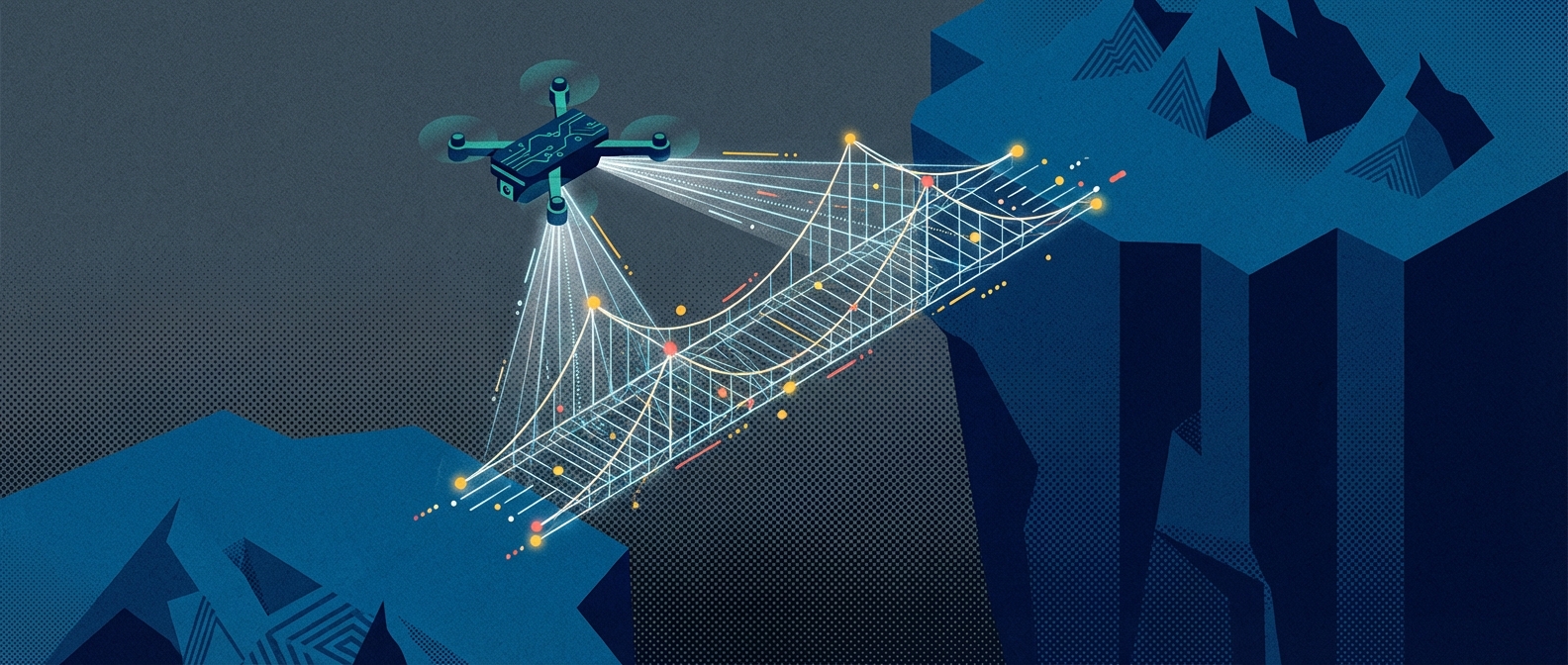
This case study examines TSAW Drones, an Indian startup transforming the country's logistics sector with advanced drone technology. It explores how the company leverages the Internet of Things (IoT), big data, cloud computing, and artificial intelligence (AI) to deliver essential supplies, particularly in the healthcare sector, to remote and inaccessible locations. The paper analyzes TSAW's technological evolution, its position in the competitive market, and the strategic choices it faces for future growth.
Problem
India's diverse and challenging geography creates significant logistical hurdles, especially for the timely delivery of critical medical supplies to remote rural areas. Traditional transportation networks are often inefficient or non-existent in these regions, leading to delays and inadequate healthcare access. This study addresses how TSAW Drones tackles this problem by creating a 'fifth mode of transportation' to bridge these infrastructure gaps and ensure rapid, reliable delivery of essential goods.
Outcome
- TSAW Drones successfully leveraged a combination of digital technologies, including AI, IoT, and a Drone Cloud Intelligence System (DCIS), to establish itself as a key player in India's healthcare logistics. - The company pioneered critical services, such as delivering medical supplies to high-altitude locations and transporting oncological tissues mid-surgery, proving the viability of drones for time-sensitive healthcare needs. - The study highlights the strategic crossroads faced by TSAW: whether to deepen its specialization within the complex healthcare vertical or to expand horizontally into other growing sectors like agriculture and infrastructure. - Favorable government policies and the rapid evolution of smart-connected product (SCP) technologies are identified as key drivers for the growth of India's drone industry and companies like TSAW.
Host: Welcome to A.I.S. Insights, powered by Living Knowledge. I’m your host, Anna Ivy Summers. Host: Today, we're looking at a fascinating case study titled "TSAW Drones: Revolutionizing India's Drone Logistics with Digital Technologies". Host: It explores how an Indian startup is using advanced drone technology, powered by AI and IoT, to deliver essential supplies to some of the most remote locations in the country. Host: Alex, welcome. To start, can you set the scene for us? What's the big real-world problem that this study addresses? Expert: Hi Anna. The core problem is geography. India has vast, challenging terrains—think remote Himalayan villages or regions with non-existent roads. Expert: For critical medical supplies like vaccines or blood, which often require a temperature-controlled cold chain, traditional transport is slow and unreliable. Expert: The study highlights how these delays can have life-or-death consequences. TSAW Drones' mission is to solve this by creating what their CEO calls a 'fifth mode of transportation'—a delivery highway in the sky. Host: A fifth mode of transportation, I like that. So how did the researchers approach this topic? Expert: This was a classic case study. They did a deep dive into this one company, TSAW Drones, to see exactly how it works. Expert: They analyzed its technology, its business strategy, its partnerships, and the competitive landscape it operates in. It gives us a very detailed, real-world blueprint for innovation. Host: And what were the key findings from that deep dive? What makes TSAW's approach so successful? Expert: The study points to three main things. First, their success isn't just about the drones; it's about the integrated technology platform behind them. Expert: They've built something called a Drone Cloud Intelligence System, or DCIS. It uses AI, IoT, and cloud computing to manage the entire fleet, from optimizing flight paths in real-time to monitoring battery health and weather conditions. Host: So it's the intelligent brain that makes the whole operation work. What has this technology enabled them to do? Expert: It’s enabled them to achieve some incredible logistical feats. The study gives amazing examples, like delivering critical medicines to an altitude of 12,000 feet. Expert: Even more impressively, they pioneered the first-ever delivery of live oncological tissues from a patient mid-surgery to a lab for immediate analysis. This proves the technology is not just practical, but life-saving. Host: That is truly remarkable. The summary also mentioned that the company is at a strategic crossroads. Tell us about that. Expert: Yes, and it's a classic business dilemma. Having proven themselves in the incredibly complex and regulated healthcare sector, they now face a choice. Expert: Do they deepen their focus and become the absolute specialists in healthcare logistics? Or do they expand horizontally into other booming sectors like agriculture, infrastructure inspection, or e-commerce, where many competitors are already active? Host: That brings us to the most important question for our listeners: Why does this matter for business? What are the practical takeaways? Expert: The biggest lesson is about the power of building a full-stack technology solution. TSAW's competitive edge comes from integrating multiple technologies—AI, cloud, IoT—into one seamless system. For any business, this shows that true innovation comes from the ecosystem, not just a single piece of hardware. Host: So it’s about the whole, not just the parts. What else can business leaders learn from TSAW's journey? Expert: Their strategy of tackling the hardest problem first—high-stakes medical deliveries—is a masterclass in building credibility. It created a powerful brand reputation that now serves them well. Expert: The study also emphasizes their use of strategic partnerships with government research councils and last-mile delivery companies. No business, especially a startup, can succeed in a vacuum. Host: And the study points to favorable government policies as a key driver. Expert: Absolutely. India radically simplified its drone regulations in 2021, which turned a restrictive environment into a supportive one. It shows how critical the regulatory landscape is for an emerging industry. For any business in a new tech field, monitoring and even helping to shape policy is crucial. Host: So, to summarize, this study shows a company using an integrated technology stack to solve a critical logistics problem, proving its value in the demanding healthcare sector. Host: Now, it faces a fundamental strategic choice between specializing vertically or diversifying horizontally, a choice many growing businesses can relate to. Expert: Exactly. Their story provides a powerful roadmap on technology integration, strategic focus, and navigating a rapidly evolving market. Host: A truly insightful look at the future of logistics. Alex Ian Sutherland, thank you for your expertise today. Host: And thank you to our audience for joining us on A.I.S. Insights. We’ll talk to you next time.