An Automated Identification of Forward Looking Statements on Financial Metrics in Annual Reports
Khanh Le Nguyen, Diana Hristova
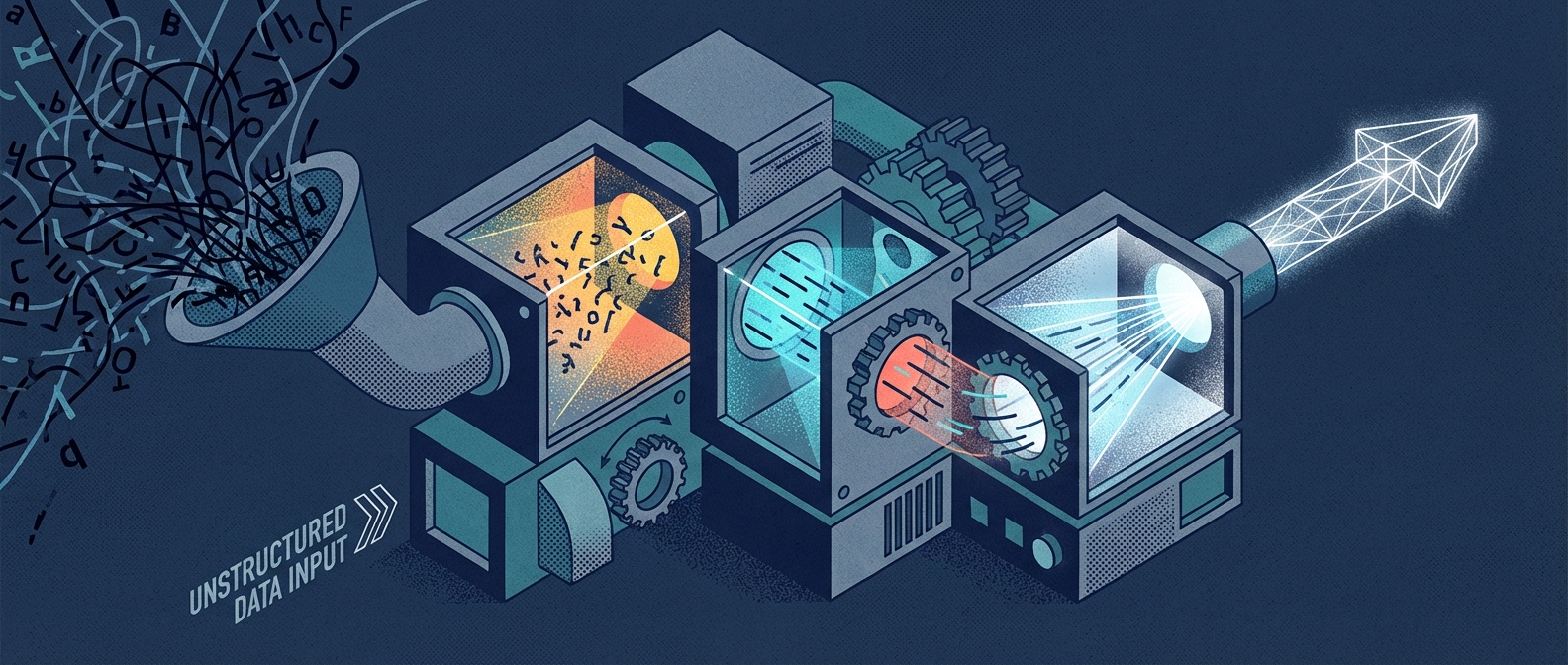
This study presents a three-phase automated Decision Support System (DSS) designed to extract and analyze forward-looking statements on financial metrics from corporate 10-K annual reports. The system uses Natural Language Processing (NLP) to identify relevant text, machine learning models to predict future metric growth, and Generative AI to summarize the findings for users. The goal is to transform unstructured narrative disclosures into actionable, metric-level insights for investors and analysts.
Problem
Manually extracting useful information from lengthy and increasingly complex 10-K reports is a significant challenge for investors seeking to predict a company's future performance. This difficulty creates a need for an automated system that can reliably identify, interpret, and forecast financial metrics based on the narrative sections of these reports, thereby improving the efficiency and accuracy of financial decision-making.
Outcome
- The system extracted forward-looking statements related to financial metrics with 94% accuracy, demonstrating high reliability. - A Random Forest model outperformed a more complex FinBERT model in predicting future financial growth, indicating that simpler, interpretable models can be more effective for this task. - AI-generated summaries of the company's outlook achieved a high average rating of 3.69 out of 4 for factual consistency and readability, enhancing transparency for decision-makers. - The overall system successfully provides an automated pipeline to convert dense corporate text into actionable financial predictions, empowering investors with transparent, data-driven insights.
Host: Welcome to A.I.S. Insights — powered by Living Knowledge. I'm your host, Anna Ivy Summers. Host: Today, we're diving into a fascinating new study titled "An Automated Identification of Forward Looking Statements on Financial Metrics in Annual Reports." Host: It introduces an A.I. system designed to read complex corporate reports and pull out actionable insights for investors. Here to break it down for us is our analyst, Alex Ian Sutherland. Alex, welcome. Expert: Great to be here, Anna. Host: So, let's start with the big picture. Anyone who's tried to read a corporate 10-K report knows they can be incredibly dense. What's the specific problem this study is trying to solve? Expert: The core problem is that these reports, which are essential for predicting a company's future, are getting longer and more complex. The study notes that about 80% of a 10-K is narrative text, not just tables of numbers. Expert: For an investor or analyst, manually digging through hundreds of pages to find clues about future performance is a massive, time-consuming challenge. Host: And what kind of clues are they looking for in all that text? Expert: They're searching for what are called "forward-looking statements." These are phrases where management talks about the future, using words like "we anticipate," "we expect," or "we believe." These statements, especially when tied to specific financial metrics like revenue or income, are goldmines of information. Host: So this study built an automated system to find that gold. How does it work? Expert: Exactly. It’s a three-phase system. First, it uses Natural Language Processing to scan the 10-K report and automatically extract only those forward-looking sentences that are linked to key financial metrics. Expert: In the second phase, it takes that text and uses machine learning models to predict the future growth of those metrics. Essentially, it's translating the company's language into a quantitative forecast. Expert: And finally, in the third phase, it uses Generative AI to create a clear, concise summary of the company's outlook. This makes the findings transparent and easily understandable for the end-user. Host: It sounds like a complete pipeline from dense text to a clear prediction. What were the key findings when they tested this system? Expert: The results were very strong. First, the system was able to extract the correct forward-looking statements with 94% accuracy, which shows it's highly reliable. Host: That’s a great start. What about the prediction phase? Expert: This is one of the most interesting findings. They tested two models: a complex, finance-specific model called FinBERT, and a simpler one called a Random Forest. The simpler Random Forest model actually performed better at predicting financial growth. Host: That is surprising. You’d think the more sophisticated A.I. would have the edge. Expert: It’s a great reminder that in A.I., bigger and more complex isn't always better. For a specific, well-defined task, a more straightforward and interpretable model can be more effective. Host: And what about those A.I.-generated summaries? Were they useful? Expert: They were a huge success. On a 4-point scale, the summaries received an average rating of 3.69 for factual consistency and readability. This proves the system can not only find and predict but also communicate its findings effectively. Host: This is where it gets really interesting for our audience. Let's talk about the bottom line. Why does this matter for business professionals? Expert: For investors and financial analysts, it's a game-changer for efficiency and accuracy. It transforms days of manual research into an automated process, providing a data-driven forecast based on the company's own narrative. It helps level the playing field. Host: And what about for the companies writing these reports? Is there a takeaway for them? Expert: Absolutely. It underscores the growing importance of clarity in financial disclosures. This study shows that the specific language companies use to describe their future is being quantified and used for predictions. Vague phrasing, which the study found was an issue for cash flow metrics, can now be automatically flagged. Host: So this is about turning all that corporate language, that unstructured data, into something structured and actionable. Expert: Precisely. It’s a perfect example of using A.I. to unlock the value hidden in vast amounts of text, enabling faster, more transparent, and ultimately better-informed financial decisions. Host: Fantastic. So, to summarize, this study has developed an automated A.I. pipeline that can read, interpret, and forecast from dense 10-K reports with high accuracy. Host: The key takeaways for us are that simpler A.I. models can outperform complex ones for certain tasks, and that Generative A.I. is proving to be a reliable tool for making complex data accessible. Host: Alex Ian Sutherland, thank you for making this complex study so clear for us. Expert: My pleasure, Anna. Host: And to our listeners, thank you for tuning into A.I.S. Insights, powered by Living Knowledge. Join us next time.