Bridging Mind and Matter: A Taxonomy of Embodied Generative AI
Jan Laufer, Leonardo Banh, Gero Strobel
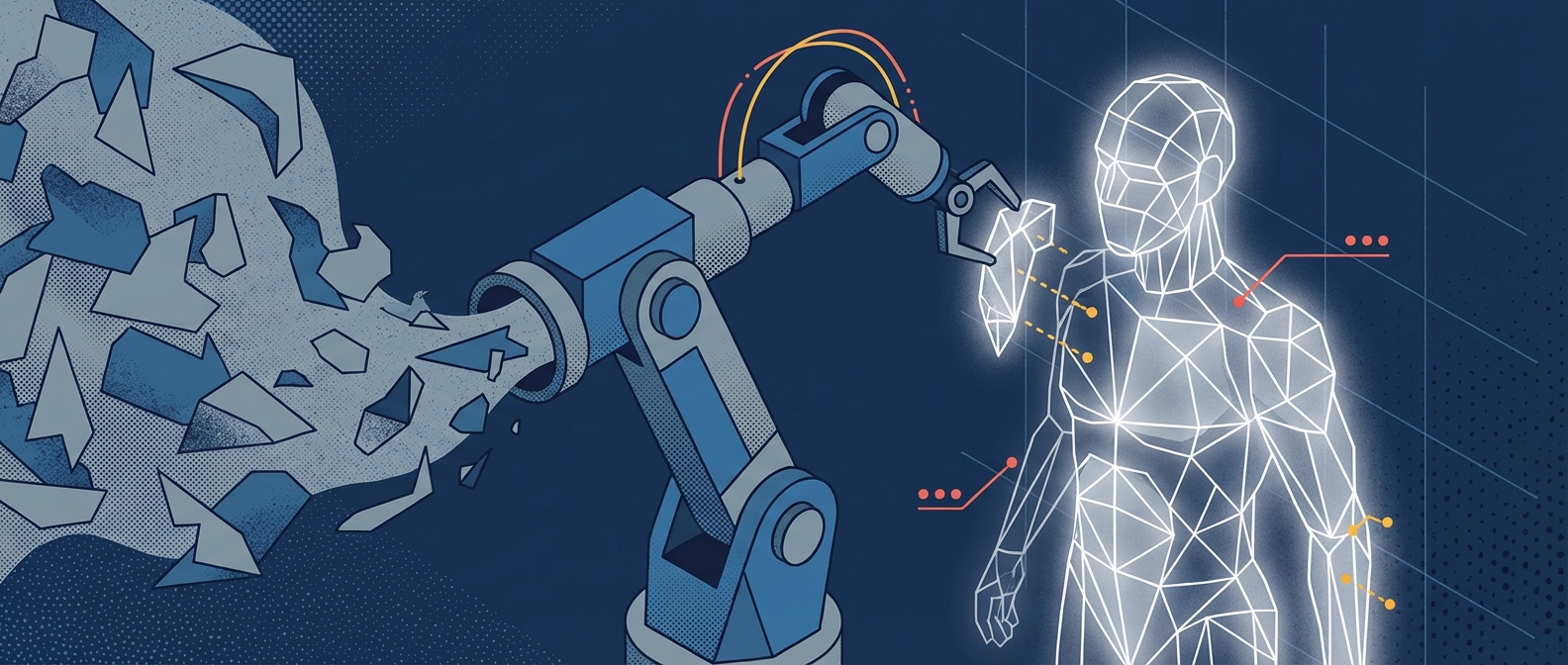
This study develops a comprehensive classification system, or taxonomy, for Embodied Generative AI—AI that can perceive, reason, and act in physical systems like robots. The taxonomy was created through a systematic literature review and an analysis of 40 real-world examples of this technology. The resulting framework provides a structured way to understand and categorize the various dimensions of AI integrated into physical forms.
Problem
As Generative AI (GenAI) moves from digital content creation to controlling physical agents, there has been a lack of systematic classification and evaluation methods. While many studies focus on specific applications, a clear framework for understanding the core characteristics and capabilities of these embodied AI systems has been missing. This gap makes it difficult for researchers and practitioners to compare, analyze, and optimize emerging applications in fields like robotics and automation.
Outcome
- The study created a detailed taxonomy for Embodied Generative AI to systematically classify its characteristics. - This taxonomy is structured into three main categories (meta-characteristics): Embodiment, Intelligence, and System. - It further breaks down these categories into 16 dimensions and 50 specific characteristics, providing a comprehensive framework for analysis. - The framework serves as a foundational tool for future research and helps businesses and developers make informed decisions when designing or implementing embodied AI systems in areas like service robotics and industrial automation.
Host: Welcome to A.I.S. Insights, the podcast at the intersection of business and technology, powered by Living Knowledge. I’m your host, Anna Ivy Summers. Host: Today, we're bridging the gap between the digital and physical worlds. We’re diving into a fascinating new study titled "Bridging Mind and Matter: A Taxonomy of Embodied Generative AI." Host: With me is our expert analyst, Alex Ian Sutherland. Alex, in simple terms, what is this study all about? Expert: Hi Anna. This study develops a comprehensive classification system for what’s called Embodied Generative AI. Think of it as AI that doesn't just write an email, but can actually perceive, reason, and act in the physical world through systems like robots or drones. Host: So we're moving from AI on a screen to AI in a machine. That sounds like a huge leap. What's the big problem that prompted this study? Expert: Exactly. The problem is that this field is exploding, but it's a bit like the Wild West. You have countless companies creating these incredible AI-powered robots, but there's no standard language to describe them. Host: What do you mean by no standard language? Expert: Well, one company might call their robot "autonomous," while another uses the same word for a system with completely different capabilities. As the study points out, this "heterogenous field" makes it incredibly difficult for businesses to compare, analyze, and optimize these new technologies. We lack a common framework. Host: So the researchers set out to create that framework. How did they approach such a complex task? Expert: They used a really robust two-step process. First, they did a systematic review of existing academic literature to build an initial draft of the classification system. Expert: But to ensure it was grounded in reality, they then analyzed 40 real-world examples—actual products from companies developing embodied AI. This combination of academic theory and practical application is what makes the final framework so powerful. Host: And what did this framework, or taxonomy, end up looking like? What are the key findings? Expert: The study organizes everything into three main categories, which they call meta-characteristics: Embodiment, Intelligence, and System. Host: Okay, let's break those down. What is Embodiment? Expert: Embodiment is all about the physical form. What does it look like—is it human-like, animal-like, or purely functional, like a factory arm? How does it sense the world? Does it have normal vision, or maybe "superhuman" perception, like the ability to detect a gas leak that a person can't? Host: Got it. The body. So what about the second category, Intelligence? Expert: Intelligence is the "brain." This category answers questions like: How autonomous is it? Can it learn new things, or is its knowledge fixed from pre-training? And where is this brain located? Is the processing done on the robot itself, which is called "on-premise," or is it connecting to a powerful model in the "cloud"? Host: And the final category was System? Expert: Yes, System is about how it all fits together. Does the robot work alone, or does it collaborate with humans or even other AI systems? And, most importantly, what kind of value does it create? Host: That's a great question. What kinds of value did the study identify? Expert: It's not just about efficiency. The framework identifies four types. There's Operational value, like a robot making a warehouse run faster. But there's also Psychological value, from a companion robot, Societal value, like providing public services, and even Aesthetic value, which influences our trust and acceptance of the technology. Host: This is incredibly detailed. But this brings us to the most crucial question for our audience: Why does this matter for business? I'm a leader, why should I care about this taxonomy? Expert: Because it’s a strategic tool for navigating this new frontier. First, for anyone looking to invest in or purchase this technology. You can use this framework as a detailed checklist to compare products from different vendors. You're not just buying a "robot"; you're buying a system with specific, definable characteristics. It ensures you make an informed decision. Host: So it’s a buyer’s guide. What else? Expert: It's also a product developer's blueprint. If you're building a service robot for hotels, this framework structures your entire R&D process. You can systematically define its appearance, its level of autonomy, how it will interact with guests, and whether its intelligence should be an open or closed system. Host: And I imagine it can also help identify new opportunities? Expert: Absolutely. The study's analysis of those 40 real-world systems acts as a market intelligence report. For instance, they found that while most systems have human-like perception, very few have that "superhuman" capability we talked about. For a company in industrial safety or agricultural monitoring, that's a clear market gap waiting to be filled. This taxonomy helps you map the landscape and find your niche. Host: So, to summarize, this study provides a much-needed common language for the rapidly emerging world of physical, embodied AI. It gives businesses a powerful framework to better understand, compare, and strategically build the next generation of intelligent machines. Host: Alex, thank you for making such a complex topic so clear and actionable for us. Expert: My pleasure, Anna. Host: And to our audience, thank you for tuning in to A.I.S. Insights. We'll see you next time.